

An ancient medium updated for the 21st century
Why does one of the greatest exponents of cutting-edge 21st century technology, Sam Altman, CEO and founder of OpenAI, use a small paper notebook to focus on his tasks and develop his ideas? And why do the executives of one of the main technology development centers in the world, Silicon Valley, send their children to schools that use only books and notebooks instead of screens?
The humble paper can be as powerful as screens, or more, when it comes to improving concentration, boosting inspiration, organizing our lives and freeing our minds from restrictions and worries, among other things.
Various psychological studies show that handwriting activates a wider range of brain areas than typing or dictation, generally resulting in better assimilation of content and deeper concentration in our reflections and creations. Some studies also indicate that reading on paper tends to be more effective, with better comprehension and retention, than reading on digital media, especially with difficult and complex subjects.
On the other hand, it is quite common to feel that paper keeps us away from the distractions so typical of our digital devices. For many people, sheets of cellulose are becoming a refuge of calm that invites a certain disconnection from the outside world in order to strengthen the connection with the inner world.
For all these reasons and more, in the century of over-digitalization and hyper-artificialization, many of us are rediscovering the value of humble paper as a medium for steering our lives in a simple, satisfying, calm, sustainable, safe and healthy way.
But what techniques and tools can help us make better use of the potential that paper-based writing and reading have for our conscious personal development?
The Papers for Progress offer concrete and complete answers to that question. This stationery system is especially suited to creative, complex and conscious people, the ones who aspire to evolve and progress, effectively and in parallel, in different areas of their lives. It is a particularly powerful way of using this ancient medium, paper, to support self-knowledge, self-creation, self-management and self-care —that is, the four pillars of the Vitalintegral Method.
This system meets all our stationery needs: from taking notes to keeping a diary, from planning the week to designing the different areas of our life, from remembering our best thoughts to tracking our habits, from drawing and painting to doodling and sketching. This system is holistic and integrative, adaptable and modular, open and dynamic, so that each user can easily adapt it to their needs, interests and possibilities at any moment.
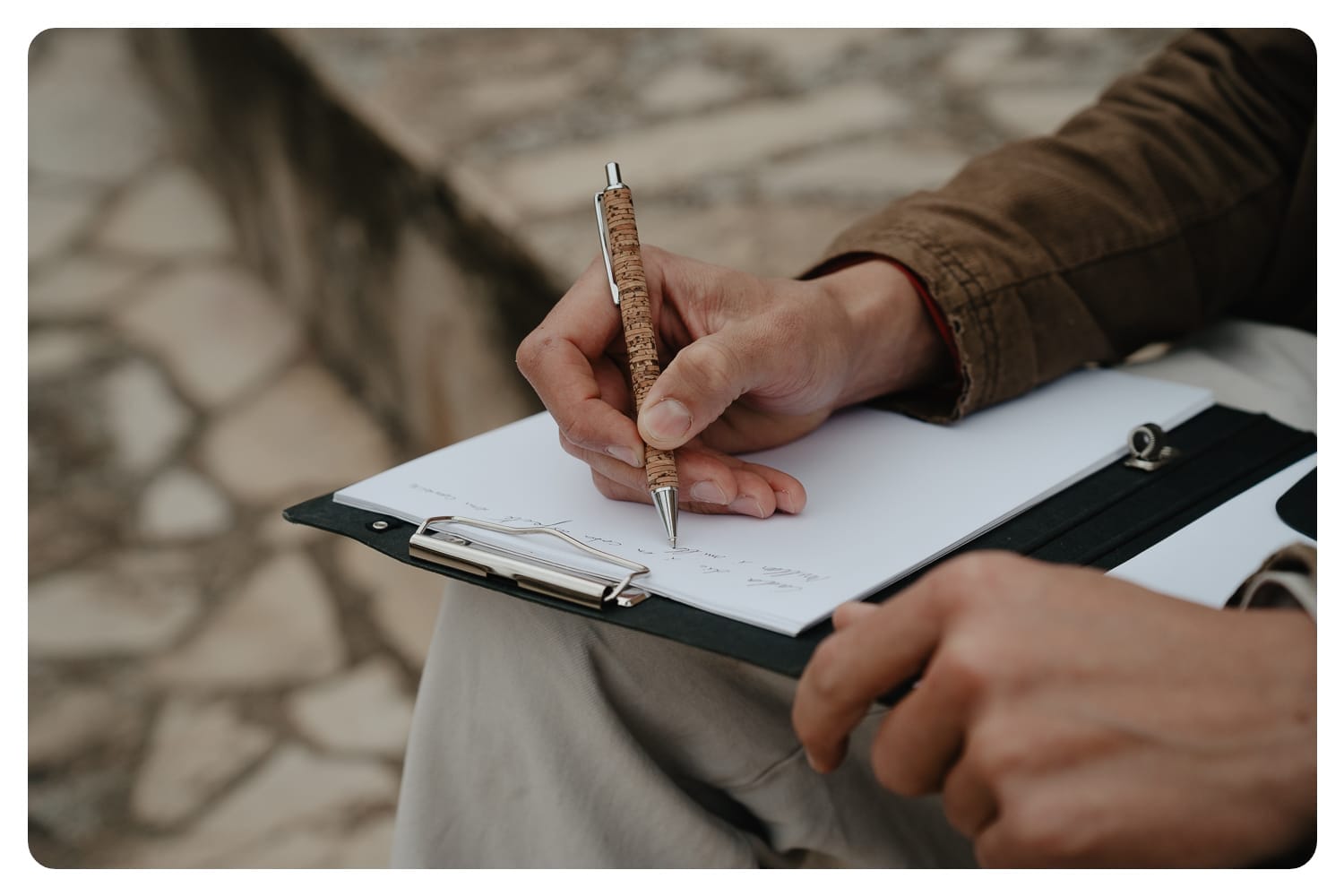
As you may know, the Papers for Progress are one of the seven fundamental proposals of the Vitalintegral Method. They constitute a toolbox of tangible tools that supports the more intangible tools of the method, such as the Philosophy for Progress and the Practices for Progress. At the same time, however, it is an autonomous system that can be used independently, that is, without any need to learn or adopt the other main proposals of the Vitalintegral Method.
The first Vitalintegral Papers for Progress were conceived in 2016 by Blai Dalmau Solé, who developed, tested and evolved them over the following years, in parallel with other proposals of the Vitalintegral Method. In 2023 these writing materials began to be tested by the participants of the first cycle of Vitalintegral retreats, and they aroused as much interest an passion as various doubts and difficulties. Since then, the Papers for Progress have matured detail by detail, evolved step by step, improved experience by experience. During 2027 they will start to be on sale, first for the members of the Vitalintegral Peers, and later, for the general public.
To discover the powerful proposals of this stationery system, consider becoming a member —if you are not already— of this Platform for Progress. You will receive messages that will inspire you to try techniques and learn approaches to use paper in a truly effective way.